May 23-24 2023 | performance design + production | part of SoA elective ARCH5431
a spontaneous creative jam with students and artists made in 2 days at the School of Architecture atrium. Life-size origami objects prompt the body to play; the school building is turned into an instrument of light and sound; and the spectators move around space and became a part of the performance.
As a design/artistic research project, this is a dialectic work-in-progress session instead of a choreographed and rehearsed performance. During the semester, students work with the dancer through workshops and discussions to sense their own bodies and their relationship with space. For the work-in-progress performance, they (the architects) make prototypes to investigate materiality and spatiality; the dance explores movement through space; the theatre designers experiment with light and sound… there is no preconceived output, and we invite the audience to be not only a spectator but active participants to experience and interact with the work.
Origami Architecture instructor: Prof. Hiroyuki Shinohara
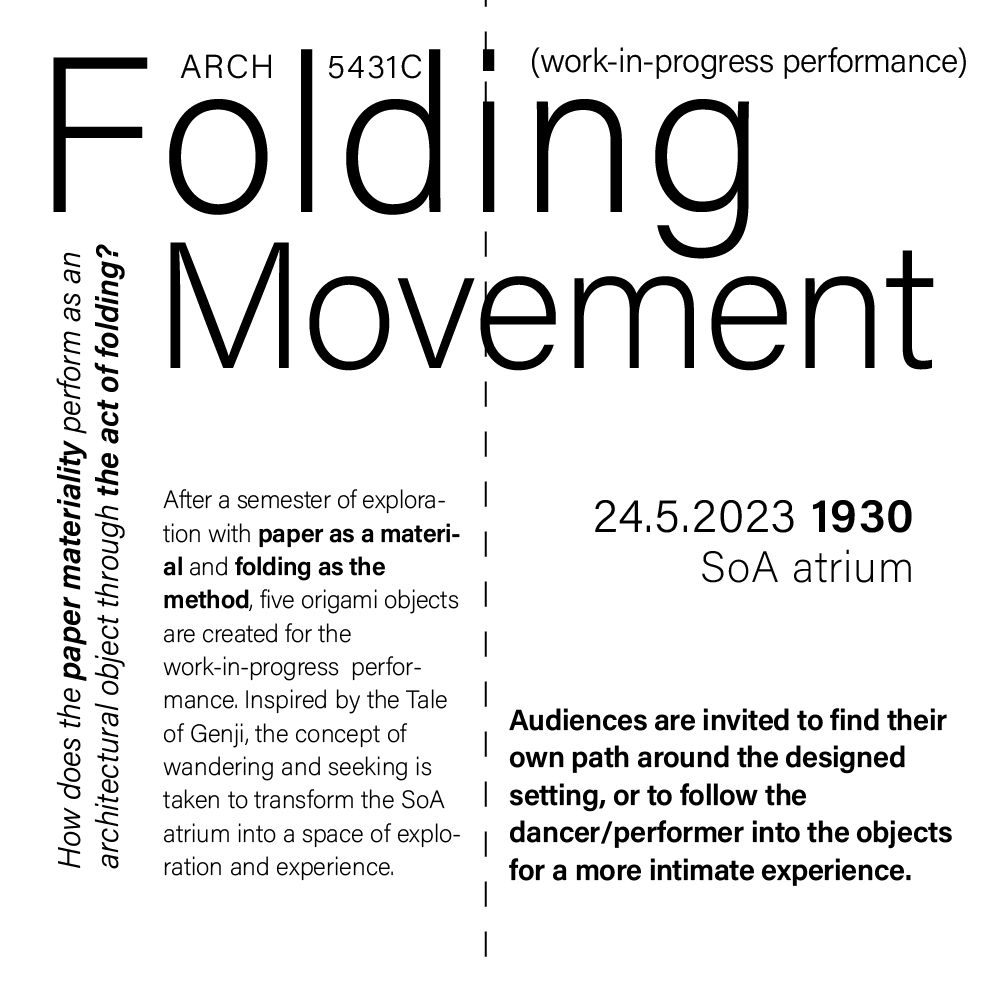
How does paper perform as an architectural object through the act of folding?
How does the body interact with the materiality of paper objects?
FOLD to stand >> MOVE around >> UNFOLD to reveal
This work is a creative experiment resulting in spatial performance. It began with investigating the materiality of paper through the act of folding to create origami objects, at the same time exploring the relationship between body and space. The Tale of Genji is read and referenced for its spatial implications of a journey and how architectural elements conceal and reveal the body. Working with theatre designers, the space of the concrete building interior became a creative medium through the intervention of light and sound to produce an atmospheric experience. The boundary between performer and spectator is also blurred, as the audience takes an active role in becoming part of the performance.
[1] The OBJECTS – paper materiality through folding
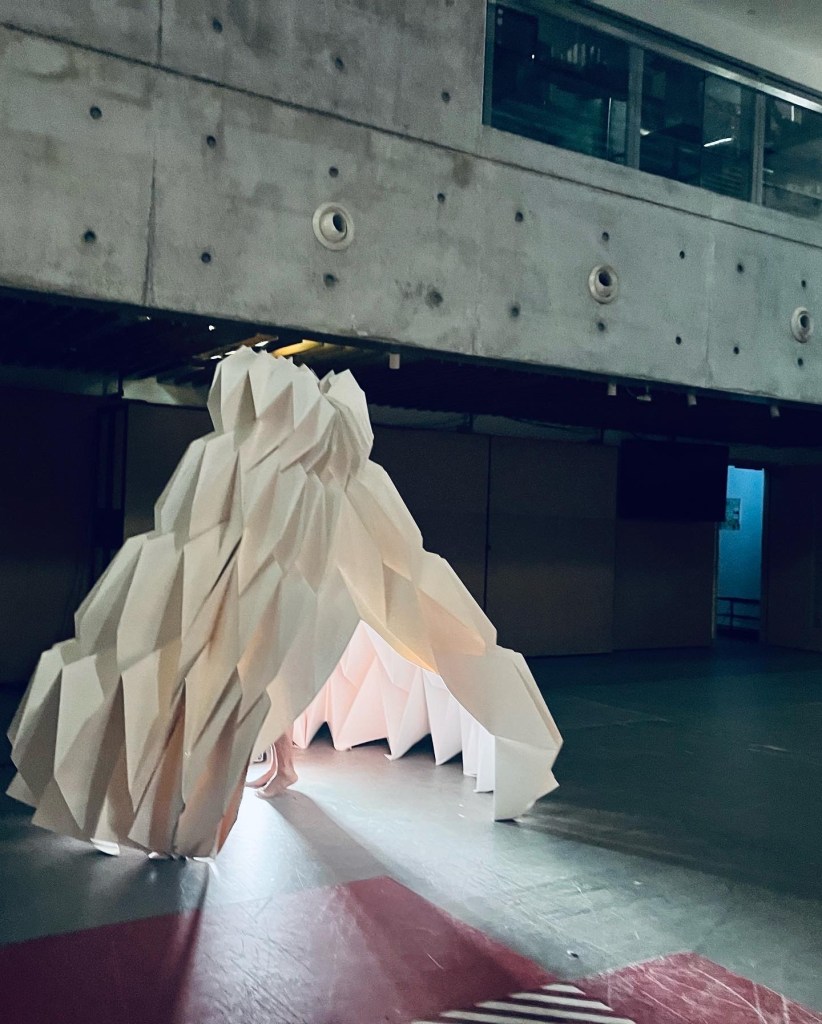
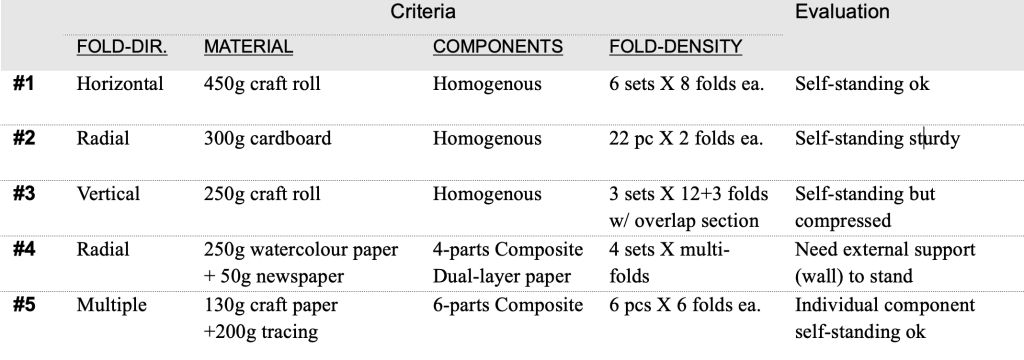
It began as a design exercise to explore the materiality of paper, with a task to make a standing object for a dance performance. The challenge is giving structure with thin and light material, informed by origami folding. The design process is iterative and multi-scale, with each step testing and learning different criteria towards the 2x2x2m object for performance.
[2] The SPACE – architecture, body & space
In parallel to designing the origami objects, workshops with dancers Rebecca and Abby were conducted to explore possibilities of how the body moves around and interacts with architectural space, resulting in the work-in-progress performance. Therefore, the origami objects are not just static pieces for viewing but a dynamic work to be inhabited and experienced. While the dancer interprets and interacts with the object through her moves, the audience can also wander around and in the objects.
This idea of a journey is inspired by the Tale of Genji, an ancient love story in Japan about the protagonist Genji’s encounters and affairs with different women in various settings. The SoA building turned it into an open stage with origami objects placed in it, creating a series of spatial instances that reveal or conceal events for the protagonist (the audience) to travel through and make their own narrative.
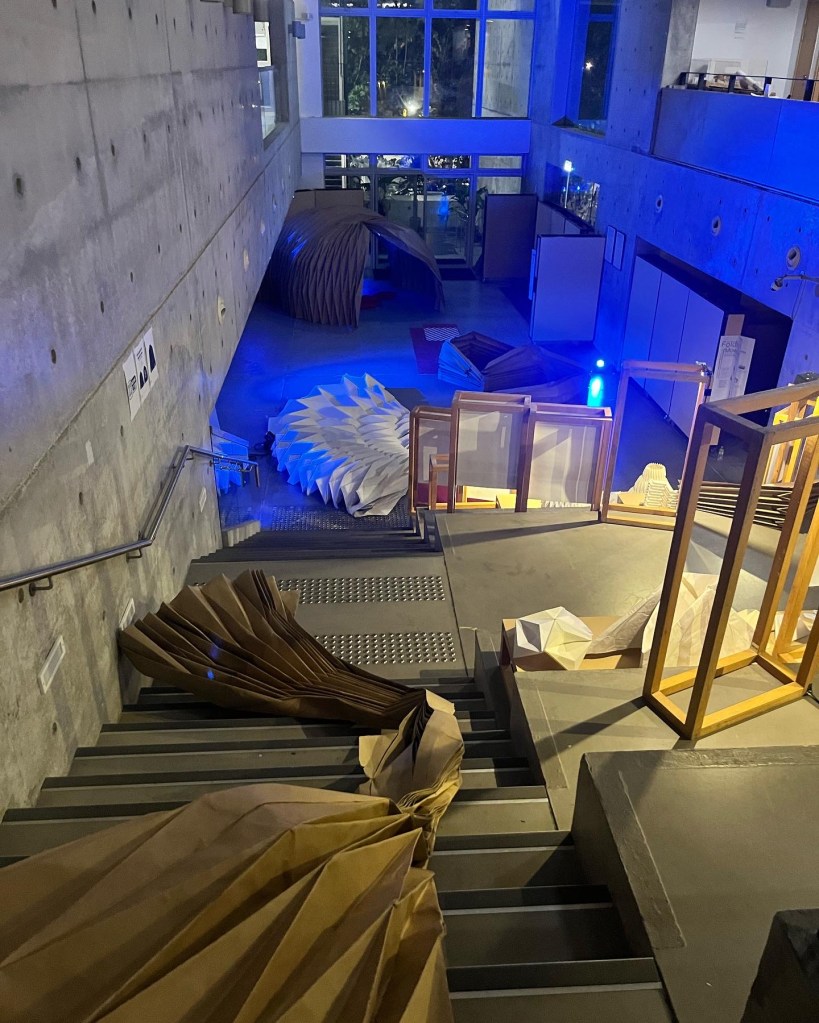
The journey begins at the 20m-tall atrium as an open field with three origami objects, then along the steps up with a display of the design process as a transition. The 1F lobby is partially enclosed by panels and origami fragments, concealing or revealing the dancer depending on the viewer’s situation. Towards the end, the crowd gathers in a smaller room with a low ceiling, circling the dancer as she moves around with the last origami object.
[3] The PERFORMANCE – architecture, body & space
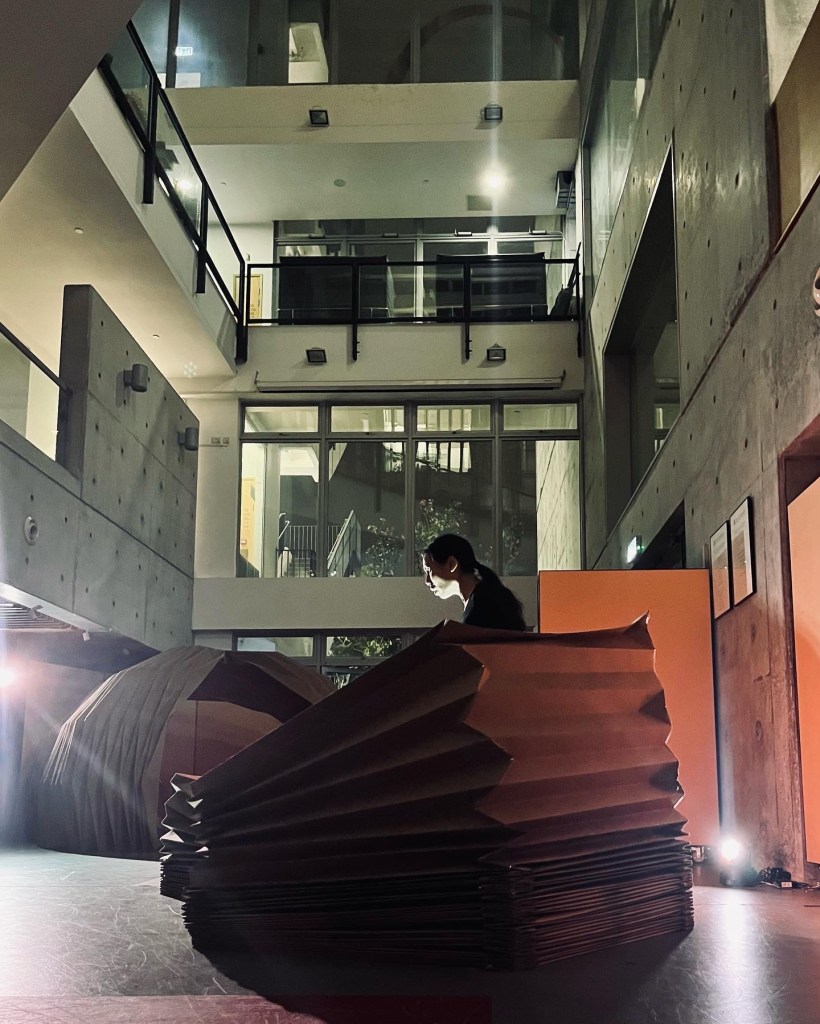
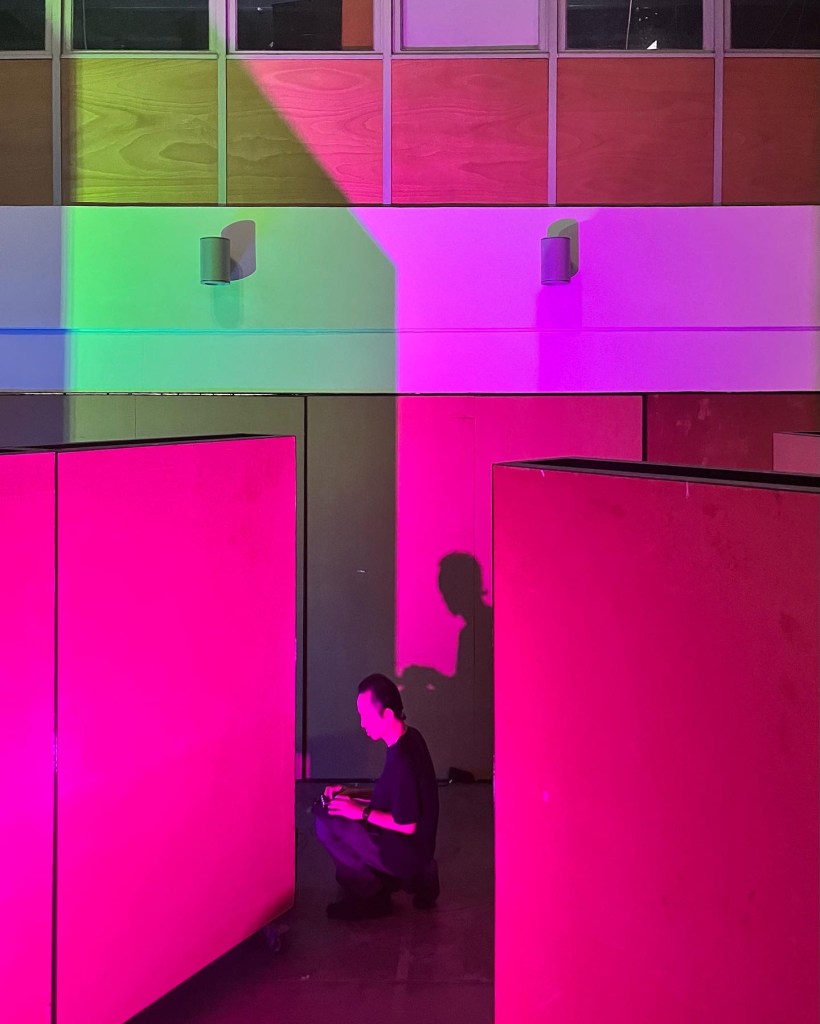
The improvisation of light and sound artists during the performance is another layer of the space-making exercise. Theatrical lighting not only highlights the objects and actions but subtly guides the motion and emotion of the audience as it projects and amplifies the dancer’s silhouette on the walls and ceiling. Instead of a musical score, the sound artist uses paper to make sound by rubbing, scrubbing, pulling, and tearing it. The building walls and panels are also used as instruments to create distorted and amplified sounds. A thick air is built by the vibrating low frequency, defining an intangible space. Together, the light and sound become a sequential pulse that follows the dancer’s (and the audience)’s travel.
As an experiential journey instead of a staged performance, there is no pre-defined “spectator-performer” relationship. The audience moves around and chooses where to view the happenings, becoming part of the performance as they cluster in different ways. Initially, the unprepared audience kept a distance from the performance “zone”, and many took a top view from the upper floor’s open corridor. As the procession moves to the first floor, although the panels obscure the view, the audience begins to feel comfortable wandering around the spaces as they discover the action. Towards the end, the crowd gathers at the threshold of the enclosed room, despite initial hesitation, forming a circle around the performer.
This work-in-progress is the groundwork to develop a future full-scale public performance. A key question to further explore is the relationship between the performer and the spectator — while the dancer is “performing”, what is the viewer’s role? How spectators move along and fill up different corners of the SoA building expands the notion of performance space. In terms of the design of origami architecture and paper materiality, lessons are learnt through the success or failure of building the structure. How do the fragility and delicacy of paper affect its transformation into architectural objects and space?







 threshold 內外之間
Leave a comment