Dec 2023 & 2024 | Seminar for students of APA digital scenography program
This is a series of four seminars for theatre design students to discuss space and its performative quality from an architectural/urban perspective. As designers, we create space in different dimensions, whether it is a stage, a room, or the city. While the technical aspects might be different, in concept, there are more commonalities than differences in the practice of space-making in theatre and architecture.
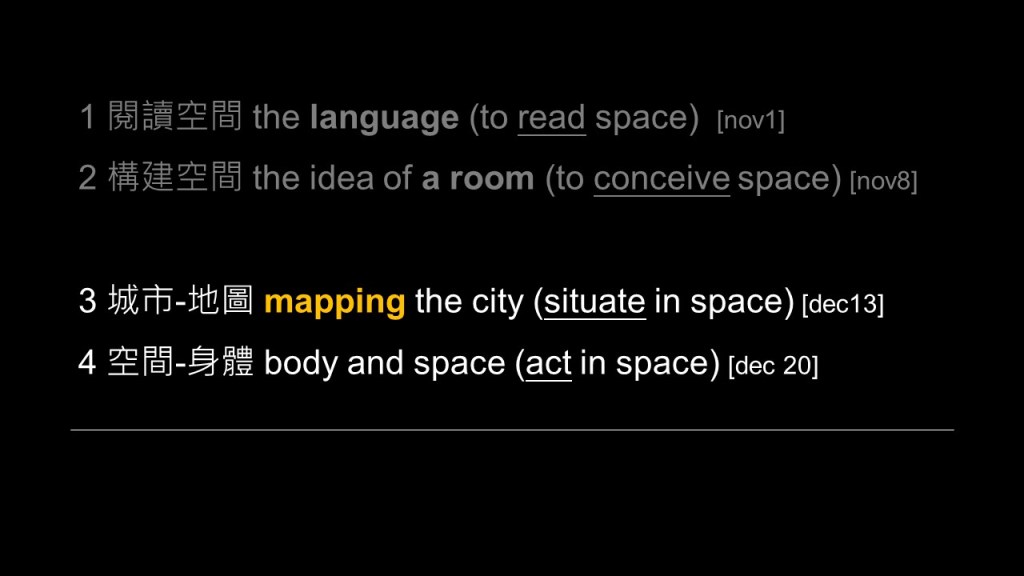
If we understand scenography as “the writing of the scenic” (Kjellmer & Rosen, 2020), this notion gives us further imagination of space, as the writing relates to how we read/perceive space in order to create, and the scenic emphasis on the experience as one situates in space. Both the reading and the experience of space are equally applicable in the practice of architecture, which the following sessions will look at it in four parts: to read space (the language), to conceive space (the room), to situate in space (the mapping), to act in space (the body).
session 1 – the language | to read space
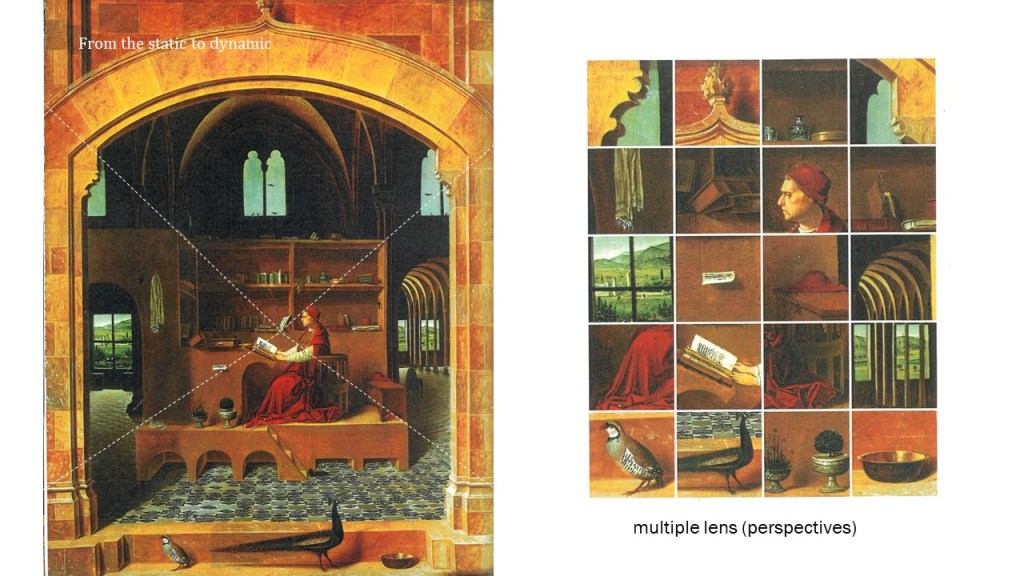
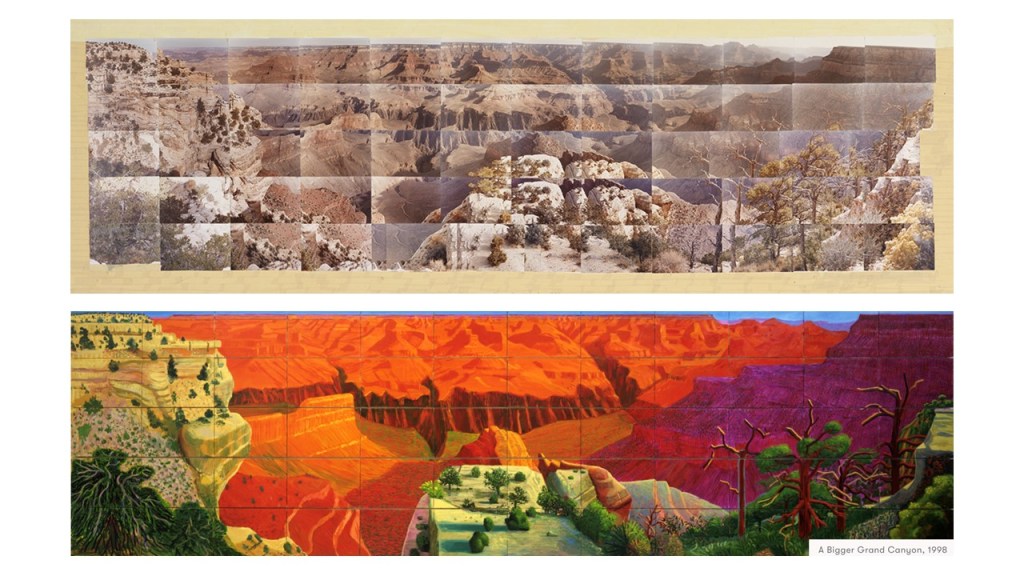
The proscenium is the common setup in classical theatre to create an illusion of a deep space extended behind the frontal plane. This sense of space is constructed by the drawing skill of perspective developed during the Renaissance, which is also a common method in architecture to design and represent architecture and space constructed through a set of project lines from a single origin. The purpose at that time, before the invention of the camera, was to create an almost realistic image of what one might see created, also suggesting the extended space out beyond the frontal plane to build up the “context” or the “scene”.
session 2 – the idea of a room | to conceive space
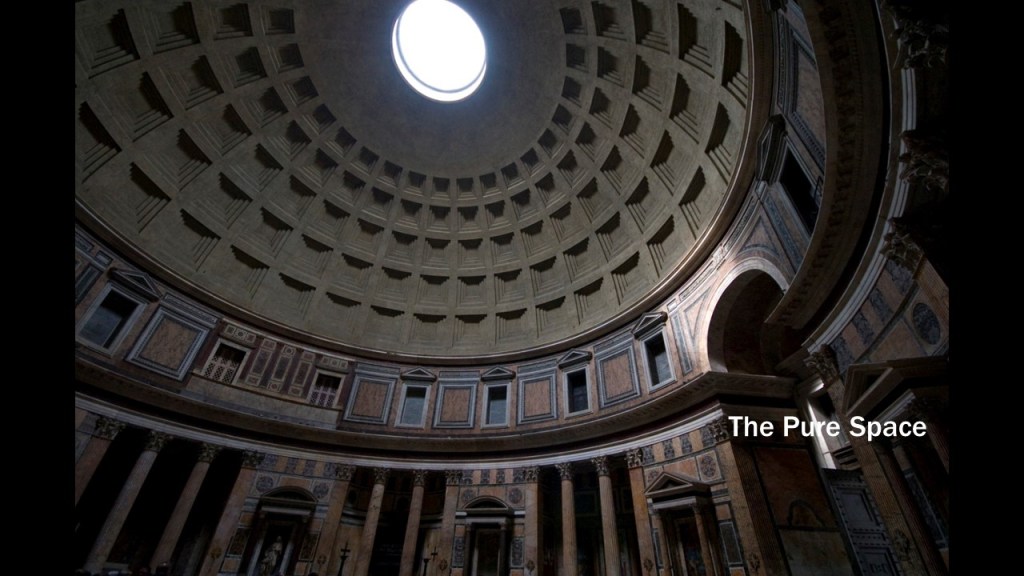
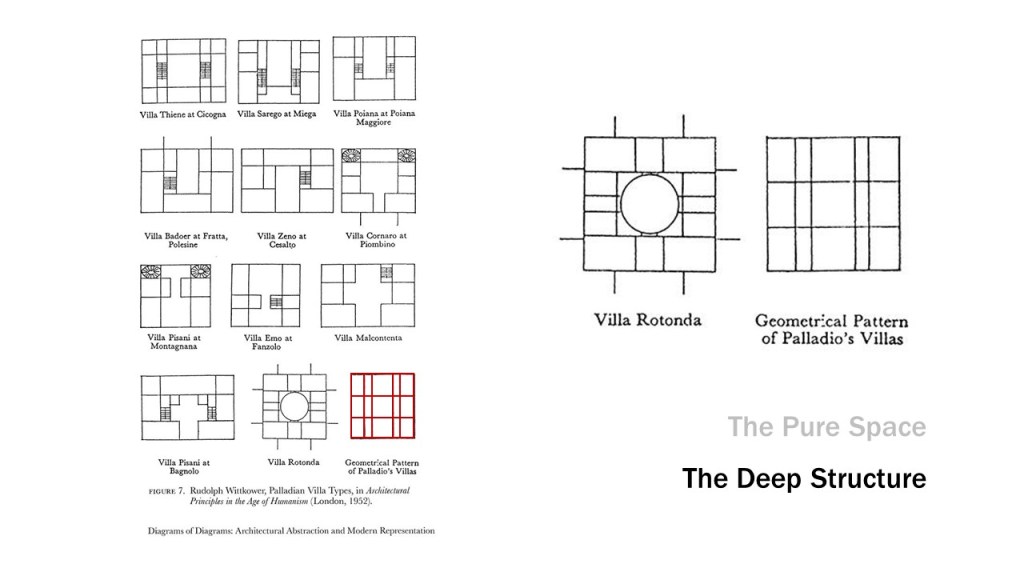
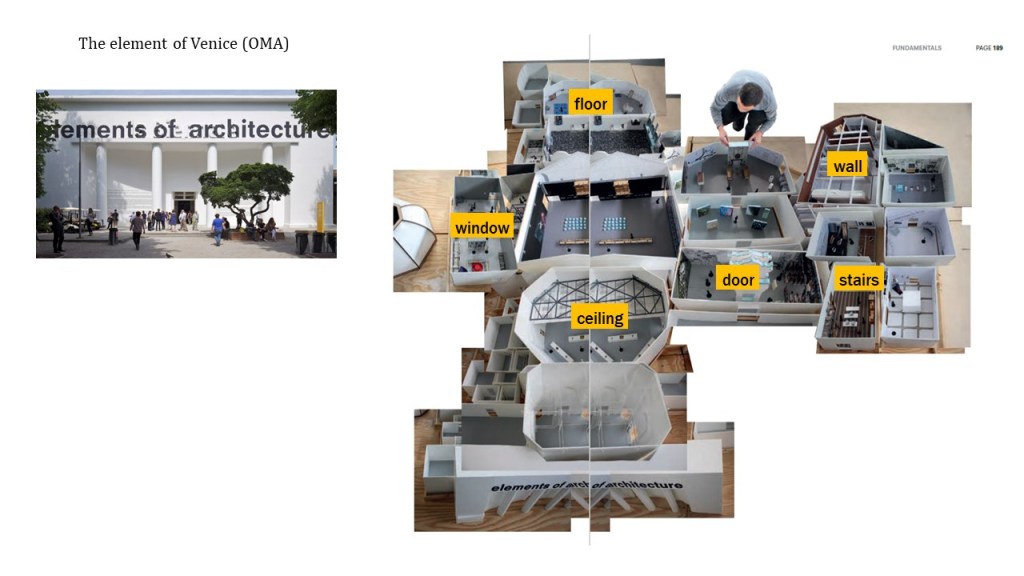
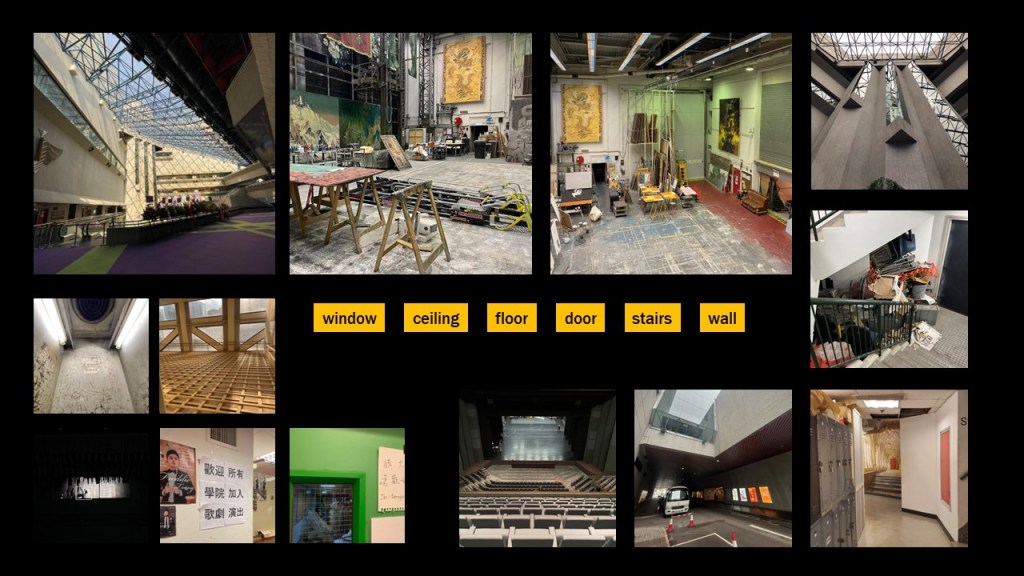
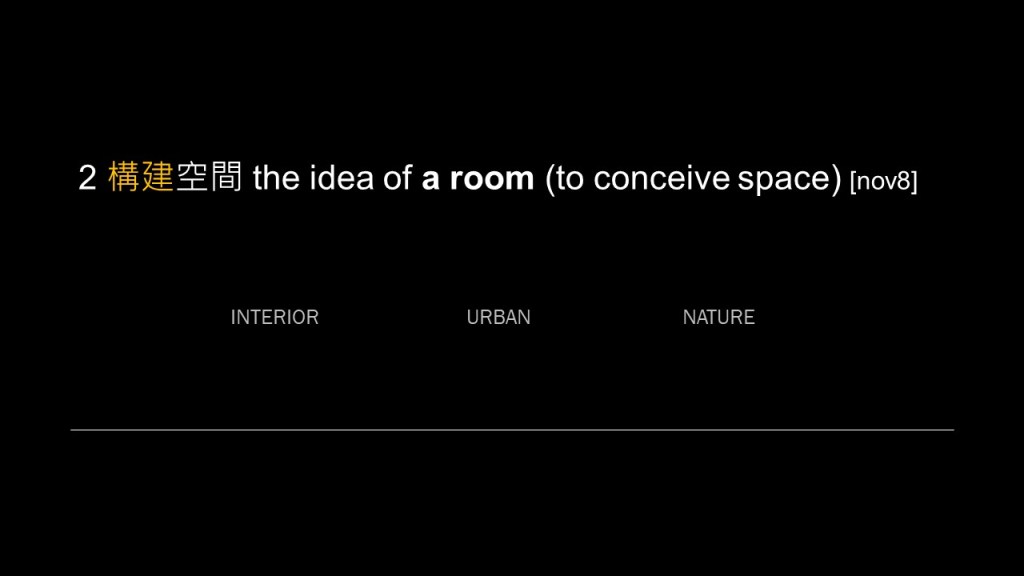
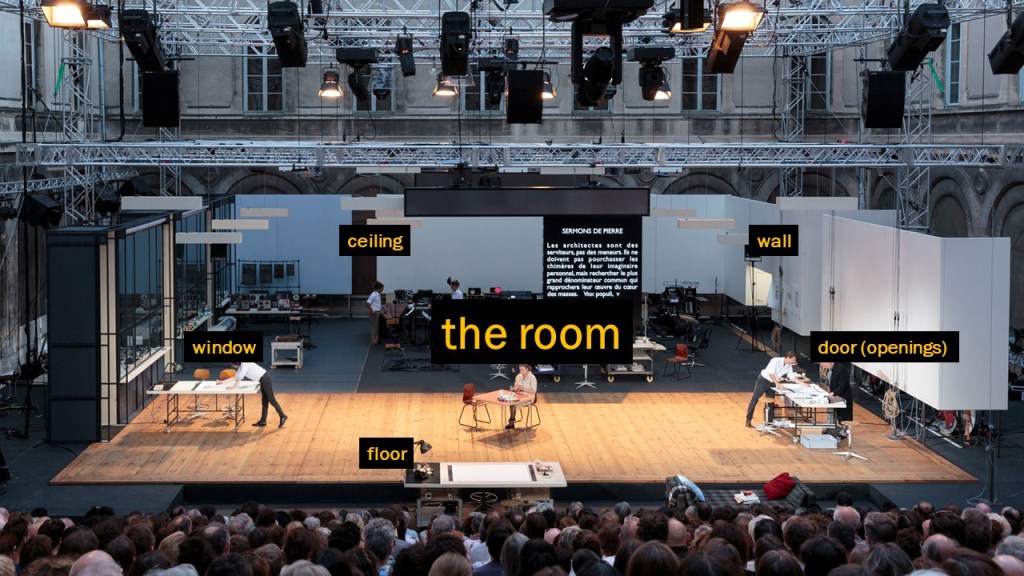
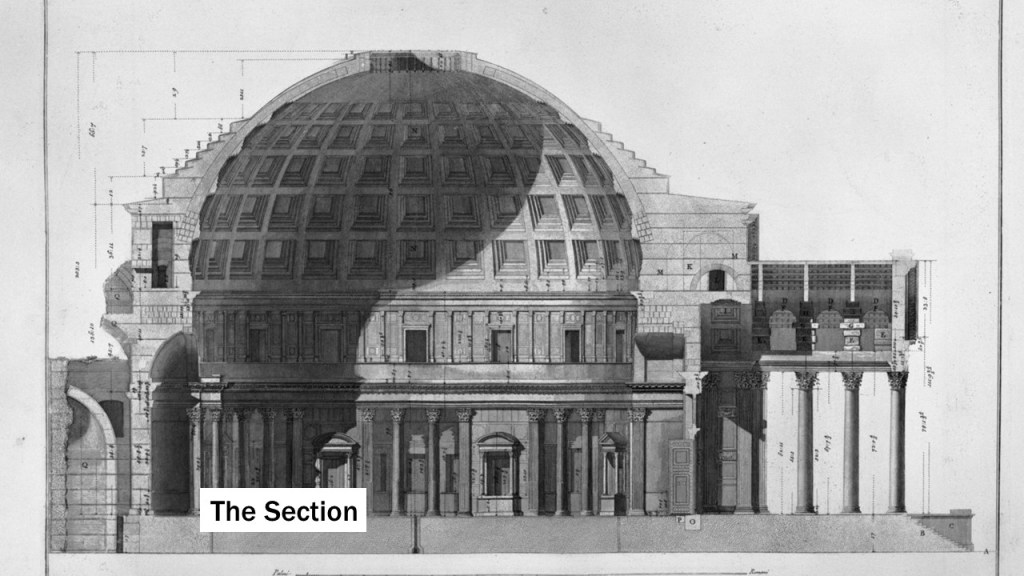
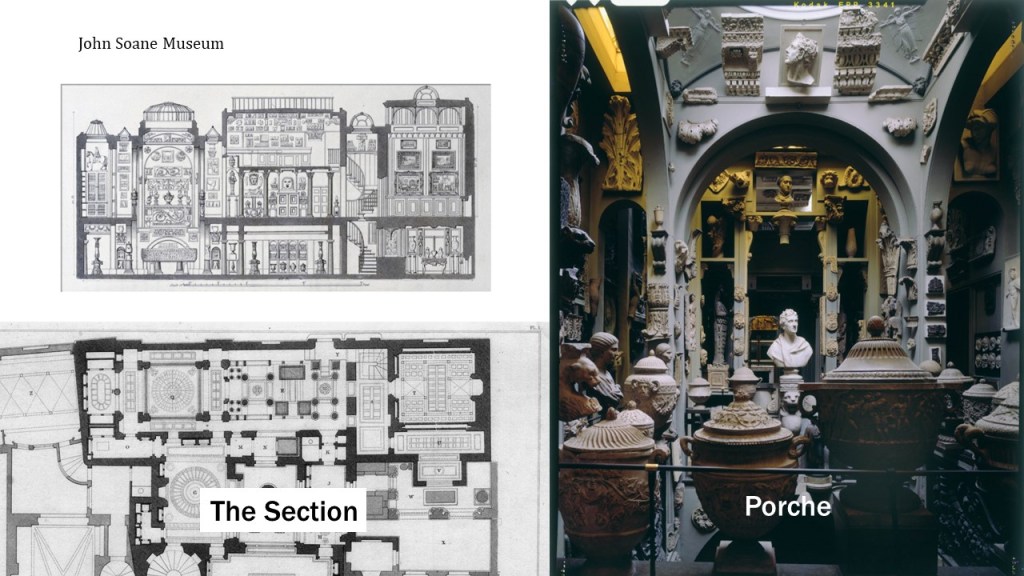
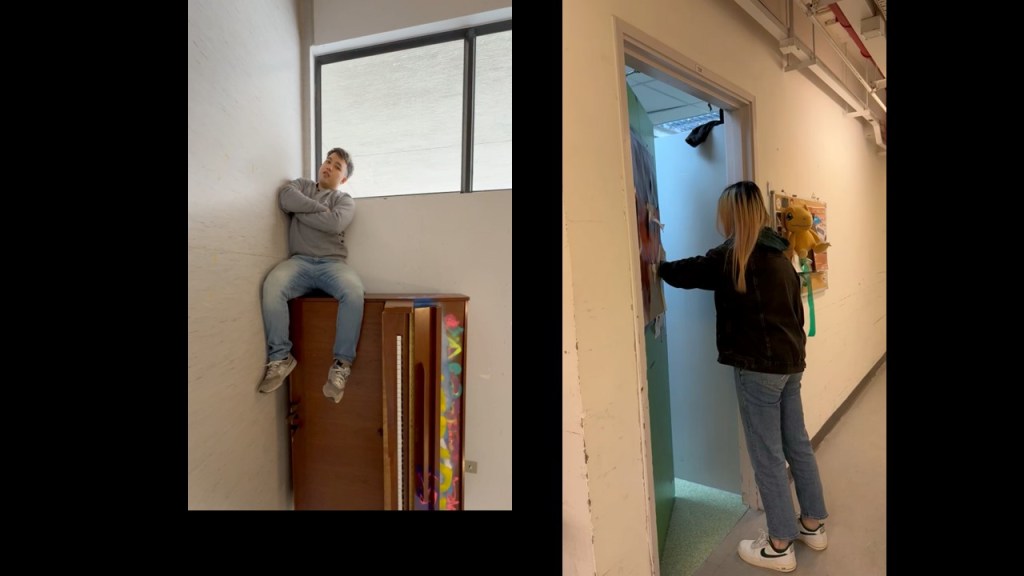
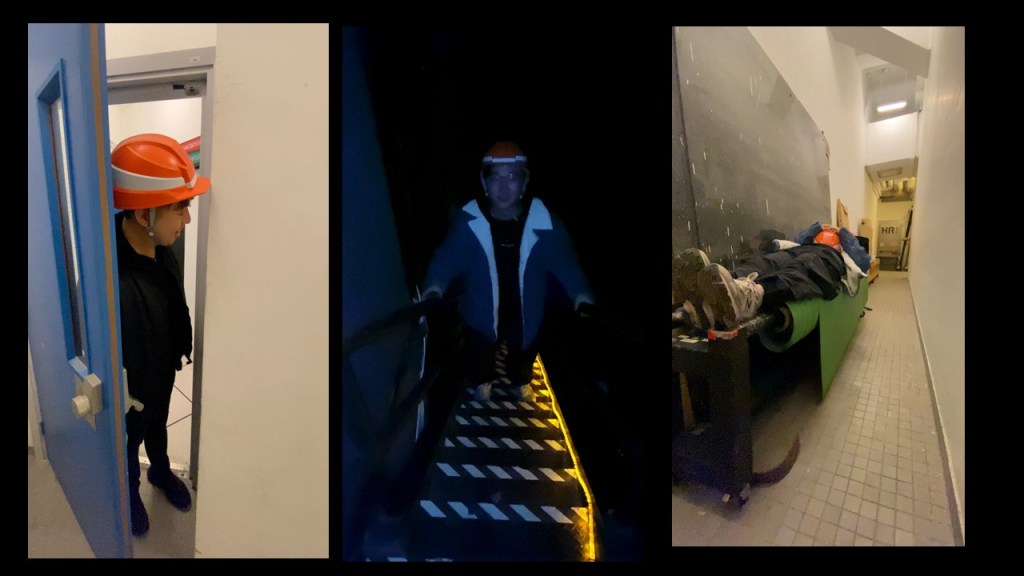
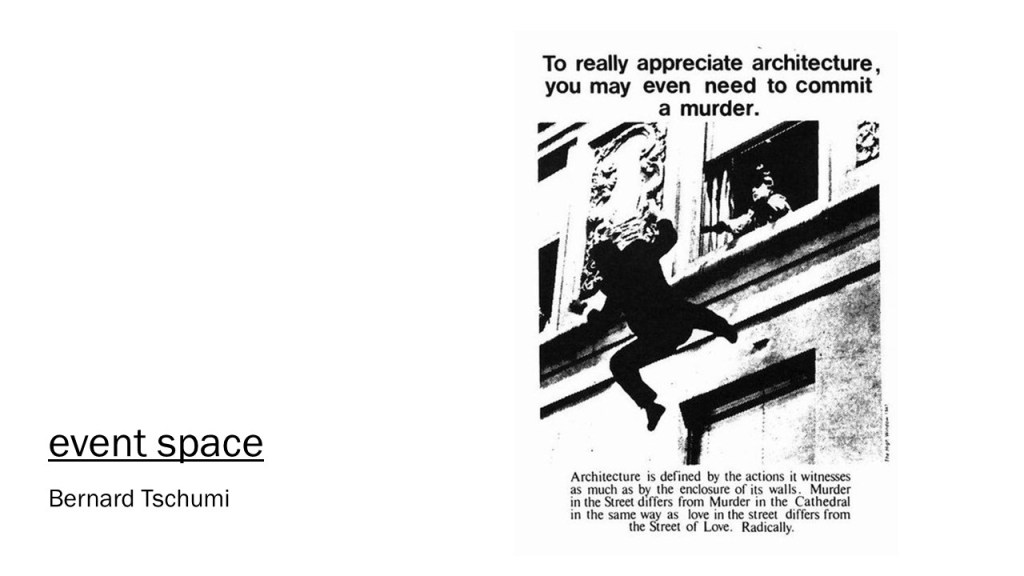
The two types of architectural elements that make space are the plane that confines space and the opening that frames space. These elements together construct the room, which is the fundamental unit in the conception of space. As Louis Kahn once said, “Architecture comes from the making of a room.” One note on expanding our spatial imagination is how “space” is not seen as an object but “consists of acts, such as inhabiting, occupying, entering, departing, confront, etc., rather than visual elements” (Pallasmaa). Pay attention to the action in space and how it interacts with the elements, such as “entering” through a door, “confronting” a step, etc.

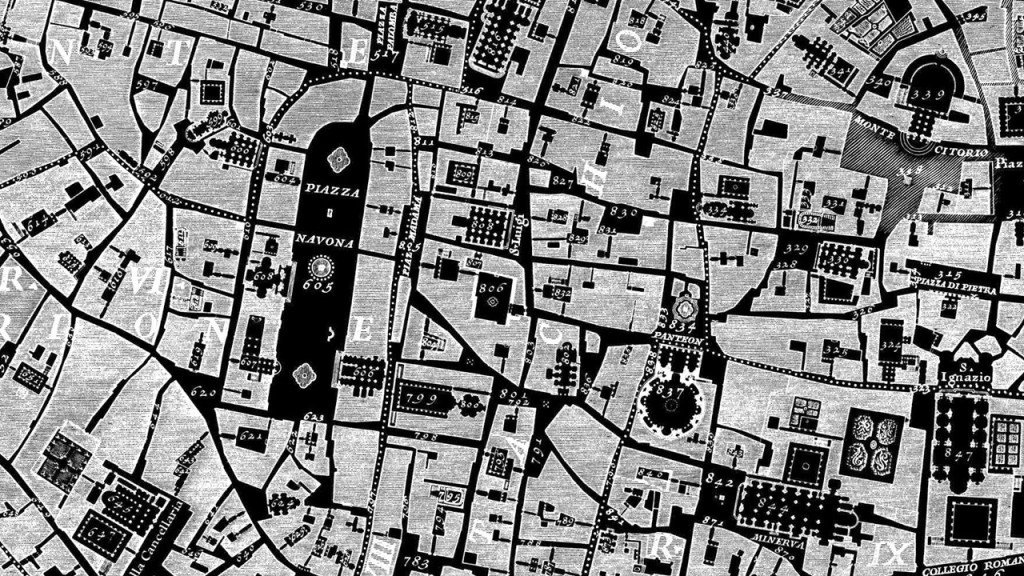
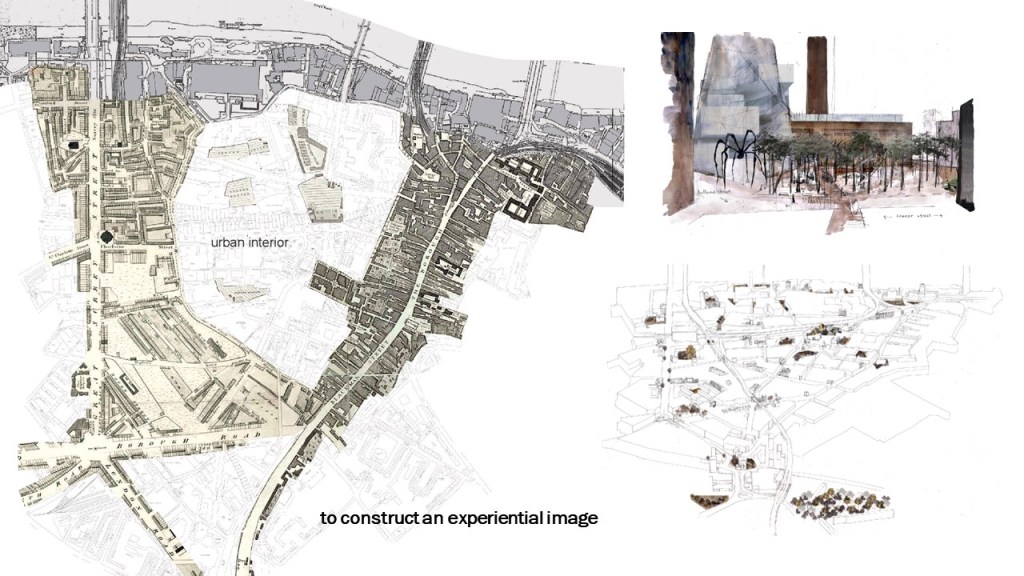
session 3 – the act of mapping | to situate in space
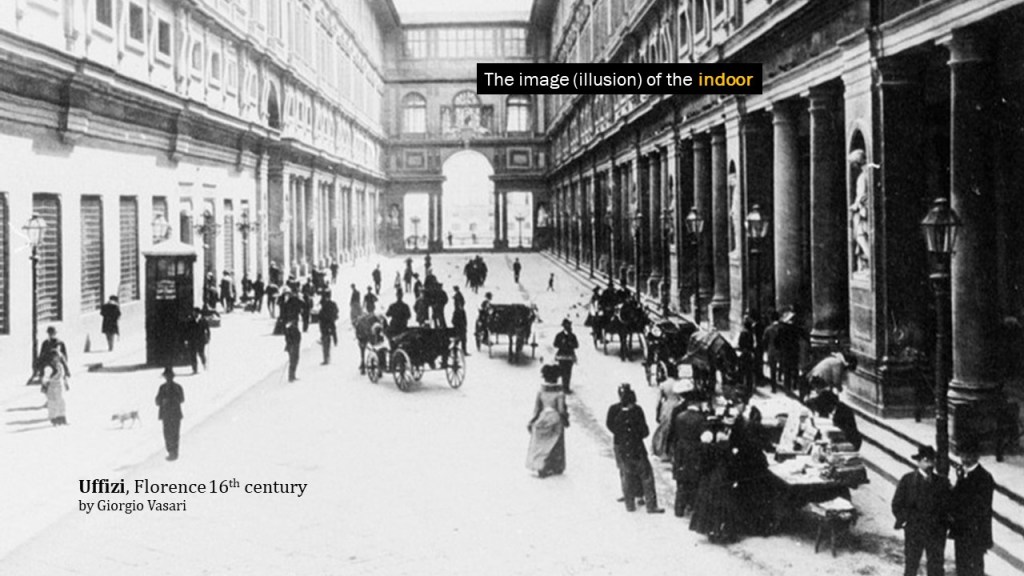
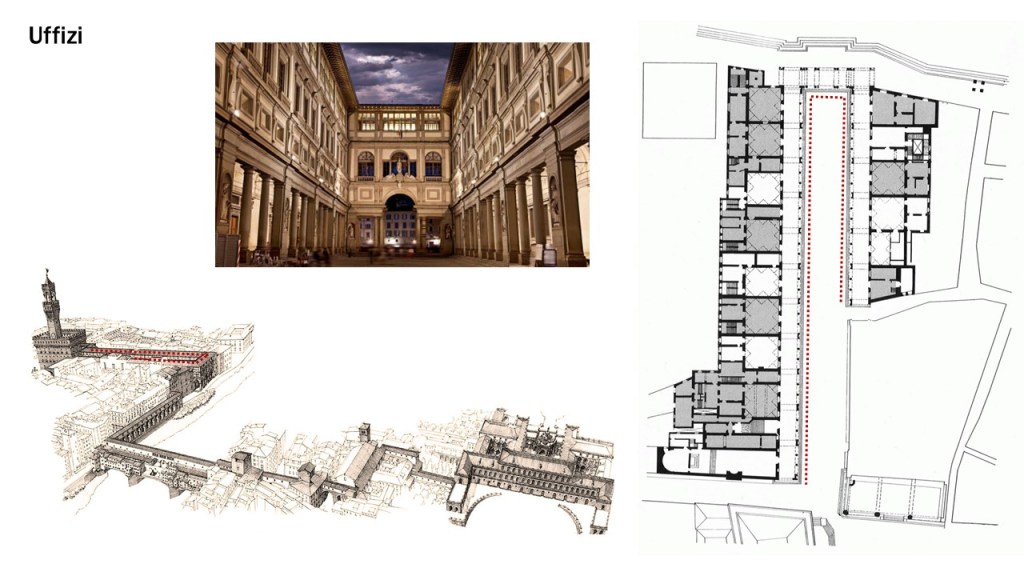
This idea of the “urban living room” was nothing new; it is the plaza that defines open space and gives the impression of interiority, where activities can be contained, and people socialize. Taking the example of the Uffizi in Florence, it embodies an urban living room. This idea of the room can be elaborated into an experience that extends from one building to another and forms a journey. The uniform colonnade is not a solid façade but a permeable “screen” that further defines the path of semi-covered space. That is how it makes the journey or a guided path (the cloister).
session 4 – dancing in the city | to act in space
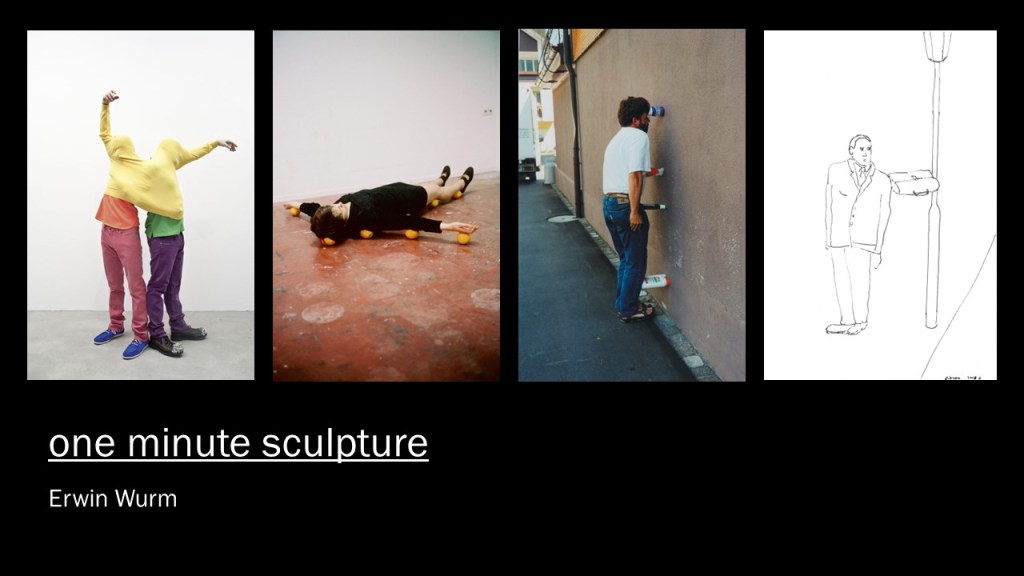
In the previous sessions, we went from reading the abstract concept of space and a room to the more physical mapping of experience in the city. It ranges from different scales, just as theatre is not only a space on stage, but it is the creation of experience, just as architecture does. In this last session, we’ll be back to the immediate space of the body.
 threshold 內外之間
Leave a comment