Jan 2024 | Presentation at mini-symposium “craft in architecture” | CUHK Architecture + NCKU Architecture
the premise
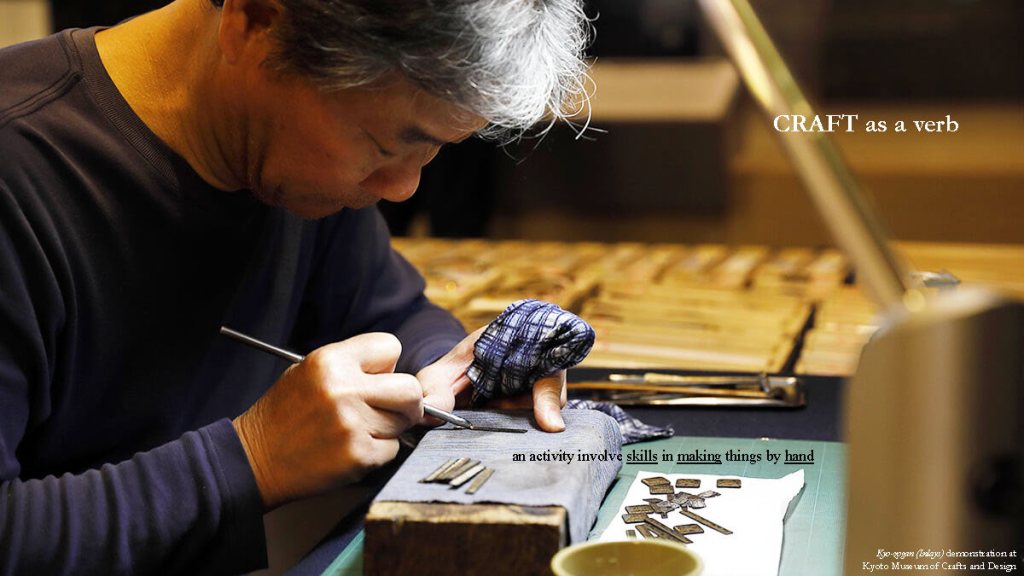
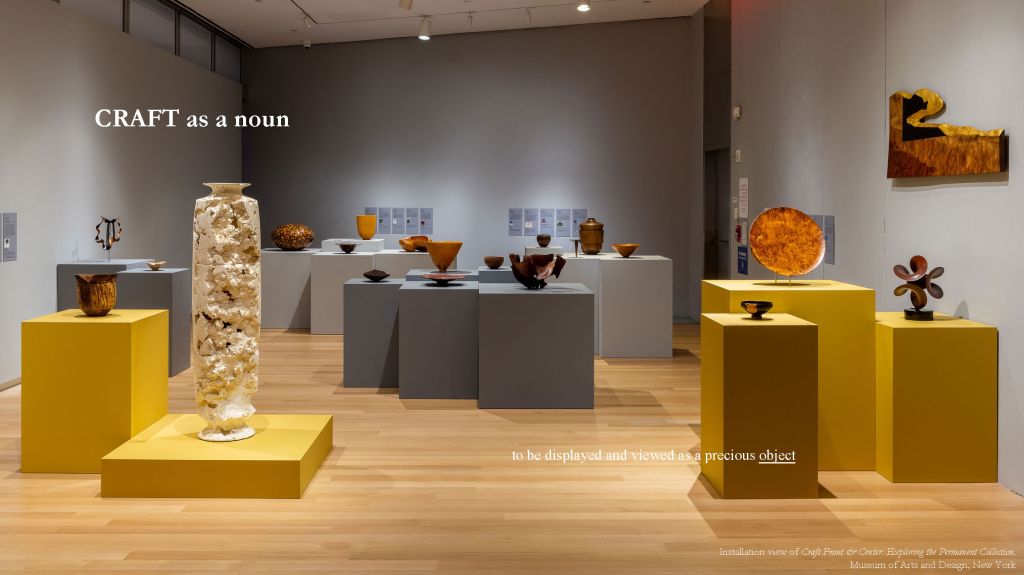
Craft is usually discussed as an object or an artefact, for “craft” is defined as “the work of making by hand”. Putting it into the context of architecture, what does “architectural craft” mean then?
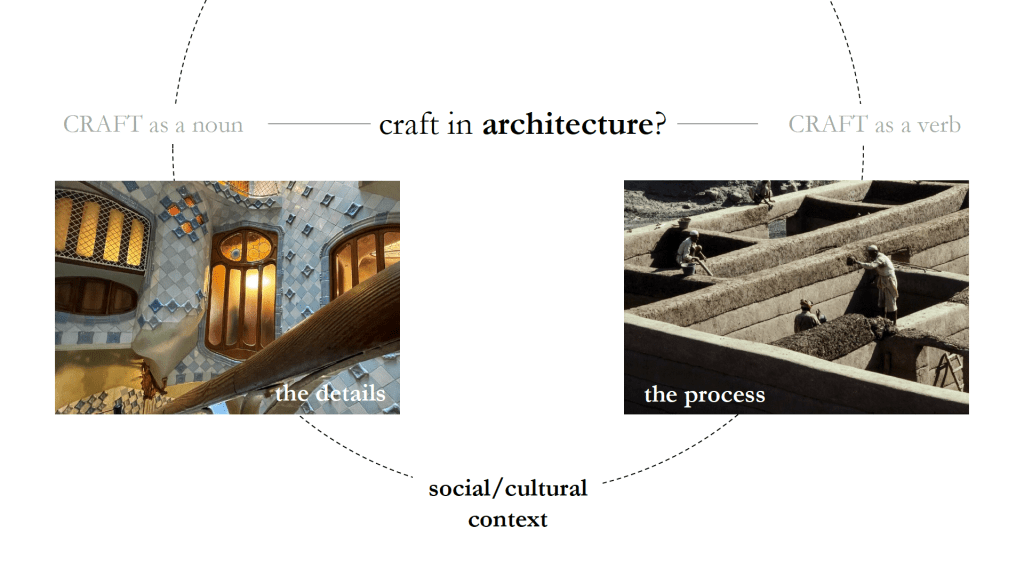
- [Details] Whether it is applied to architectural components like the glazed window, the mosaic tiles or the metal grill, this is how we usually register as “craft”, for it has a tactile quality of work that is made by hand.
- [Process] The perception of craft in architecture is expanded beyond the scope of “crafted objects” or artefacts, relating to the material instead of the visual (Adamson, 2020), which is sometimes bypassed when we discuss architectural / design “concepts”.
- [Cultural context] In Thinking through Craft, Adamson investigates the notion of craft through examples from art to architecture. He argues that the process of craft-making is not an autonomous view but a means to an end (the artful object). The social, political, and cultural context influences the type of craft by the available or popular technique, such as the medieval craftsmen guild, to the effect of technology-enabled craft nowadays.
The following presentation is framed by these three aspects of architecture’s perception of craft. To trace the positioning of craft in architecture in Hong Kong, we read through the HKIAJ from 2006-2021 as a corpus to see how craft is perceived (and represented) in this official professional journey of architects in Hong Kong.
From craftsmen’s guild to “craft” as a necessity
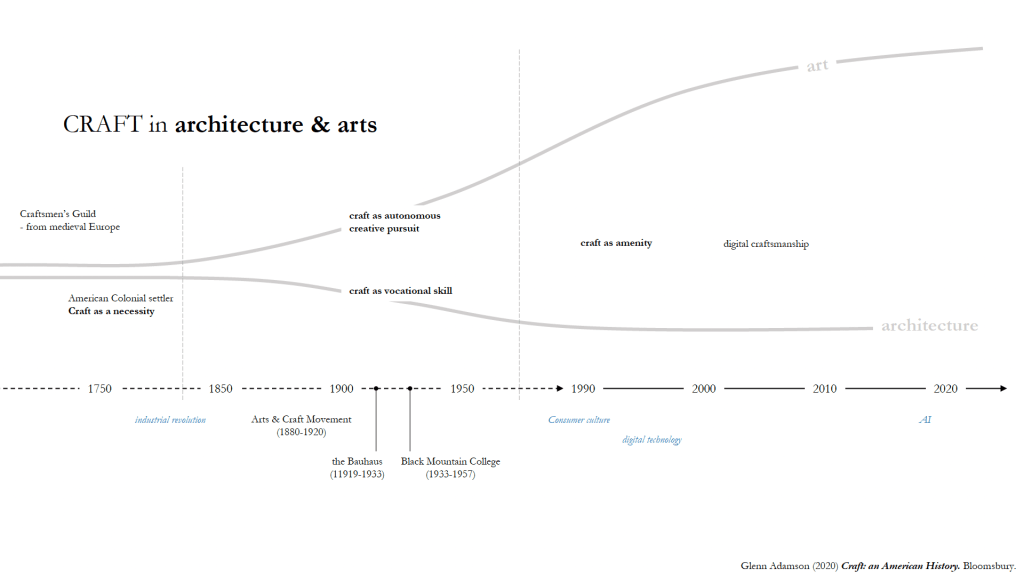
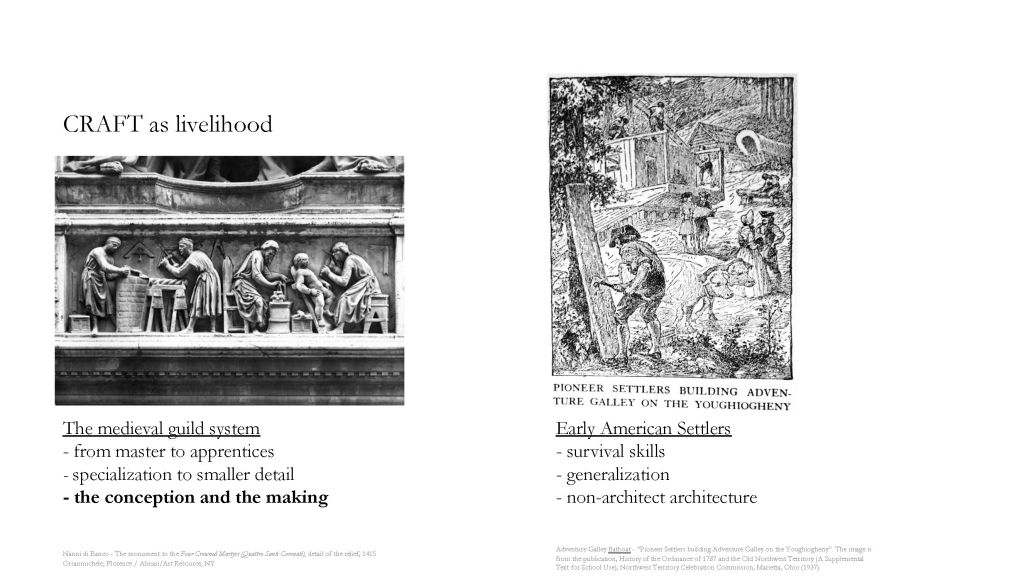
Before the Industrial Revolution, the craft was an inseparable part of architectural production. The medieval craftsmen are makers of everything essential in life, from pottery to metalwork. The guild formalises its organisation through apprenticeship, where the skill of a particular craft is learnt through repetition over years of practice – as “crafting”. In the early 18th century American settlers, craft is not only a trade but an essential or survival skill. With few resources, the making process became more generalised, where every man built their own home with their hands. These were the pre-industrialisation ideas of craft.
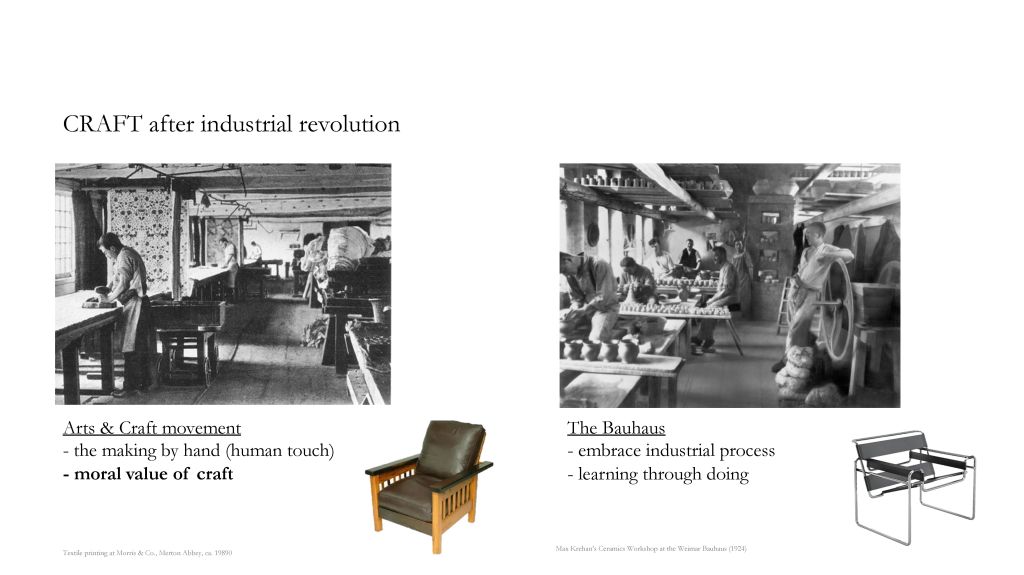
Into the 19th century, with the impact of manufacturing and the factory system, the guilds declined, and the idea of craft diverted into different streams in response. One is the Arts & Craft Movement, reacting to machine-based making and often exploitative labour conditions. It emphasises the human touch, building upon the theories of Ruskin, who advocated for the moral value of craft. On the other hand, institutions such as Bauhaus embrace industrial production instead of rejecting it, and their idea of craft is integrated with learning (and perfecting) the skills to handle machines and industrial materials such as steel tubes and other metalwork. The philosophy on craft is closely tied to material and innovative design from the newly available technology.
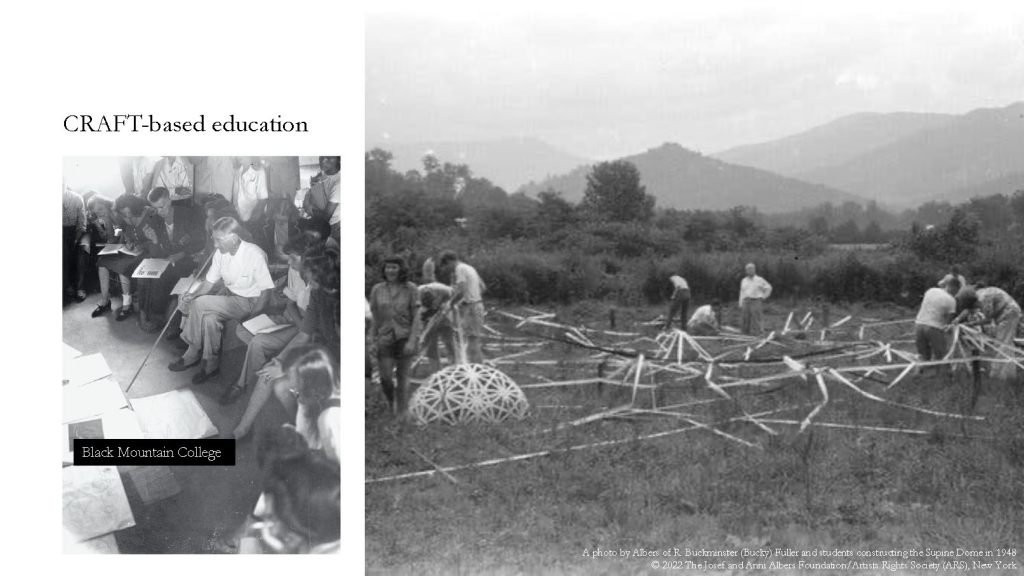
With the disruption of WWII and the Nazi invasion, craft-based education was brought from Bauhaus to the US, and a couple of former teachers in foundation studio and textile, Josef and Annis Albers, landed in North Carolina – the Black Mountain College. What the Albers did in BMC was to push further the idea of craft in Bauhaus, from acquiring the skills to perfect a craft object to the emphasis on making and internalising the craft-based skill to think and design. There is a transition from focusing on craft as the end to the means, from pursuing the perfectly crafted object to emphasising the process of “crafting”.
Reading Craft in HK Architecture through the HKIAJ
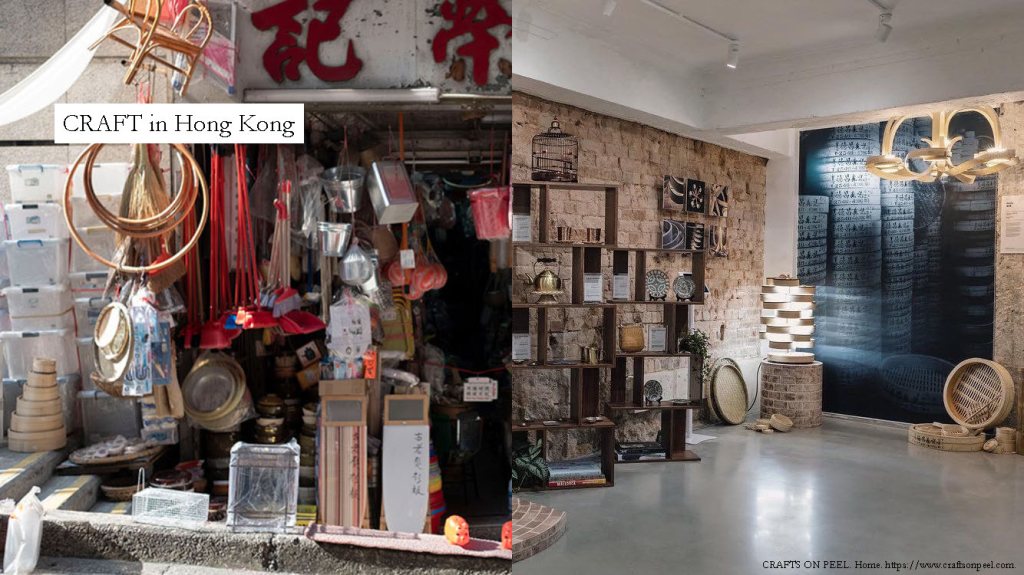
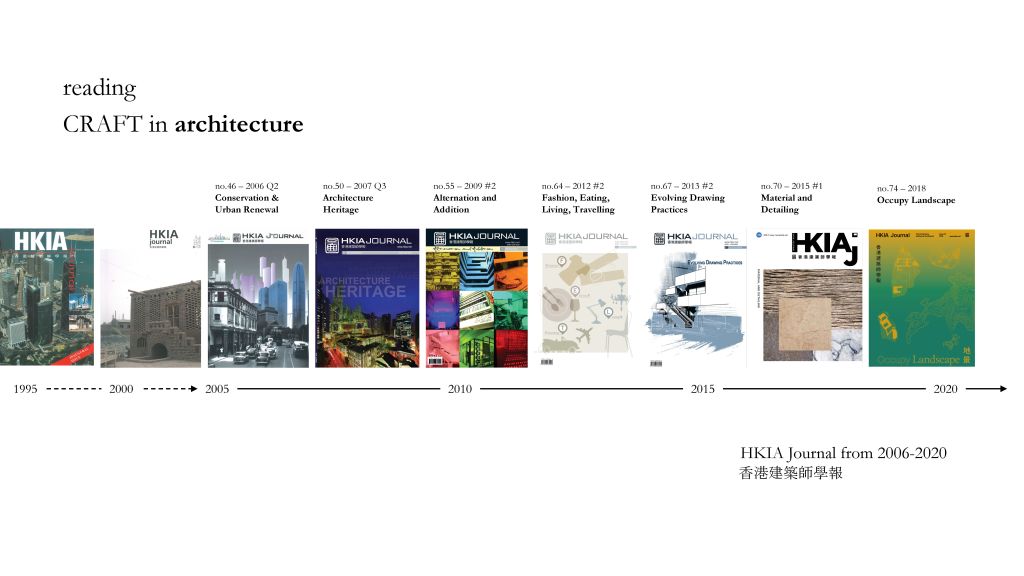
To trace the positioning of craft in architecture in Hong Kong, we read through the HKIAJ from 2006-2021 to see how craft is perceived (and represented). It is a trade-based rather than a research-based journal, which started in 1995 as an internal circular for its members. Therefore, its content mainly focuses on showcasing projects with descriptive design statements.
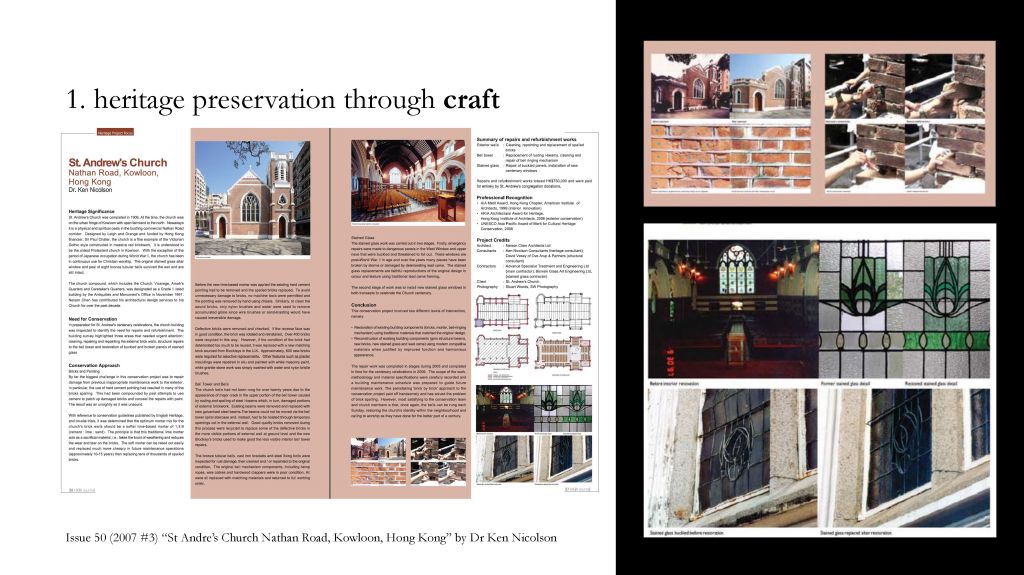
However, reading its editorial theme and projects introduced can reveal a disciplinary discourse in HK in the past 20 years. Through different generations of editorial members, it has slowly transitioned from a functional typology theme to a more topic-based exploration of the industry’s current landscape. While several issues look into heritage conservation (issue 50, 2007) and one (issue 70, 2015) on material and detail, there is yet to be a dedicated issue that focuses on craft application in architecture. A reason could be that the craft discussion is usually about small-scale artefacts, which constitute a minor part of the comprehensive building or masterplan project. While architects tend to discuss their projects in larger concepts and spatial organisation, the spirit of craft and craftsmanship is embedded into the construction and details – especially in conservation projects.
Therefore, the findings reflect the subject of craft in a variety of topics:
- Heritage reservation through craft
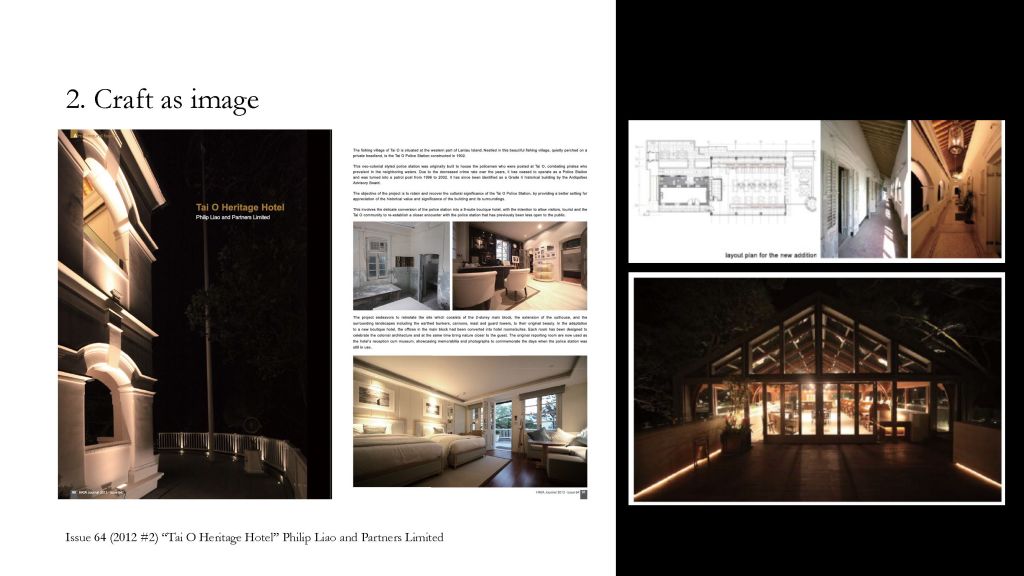
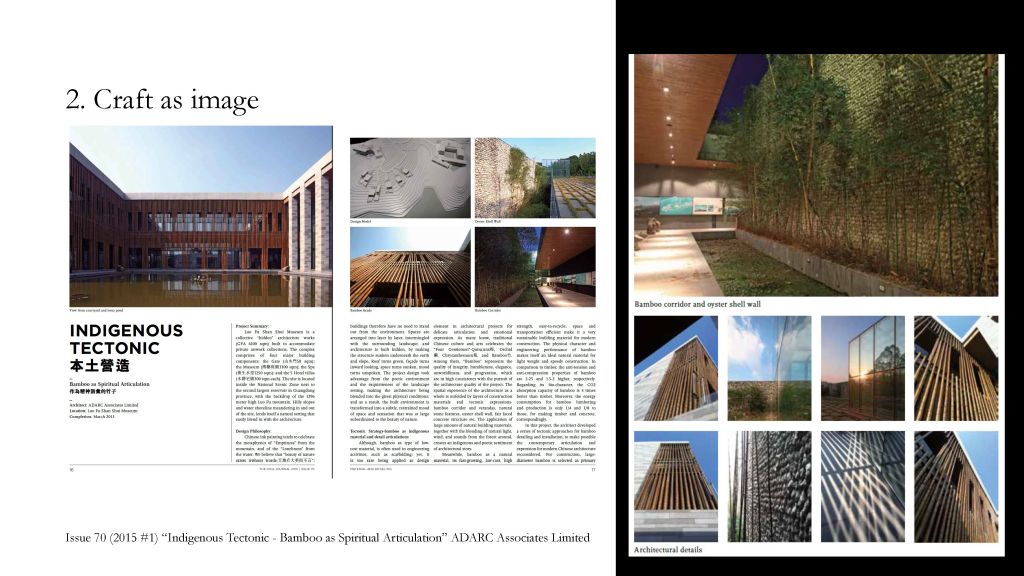
- Craft as imagery
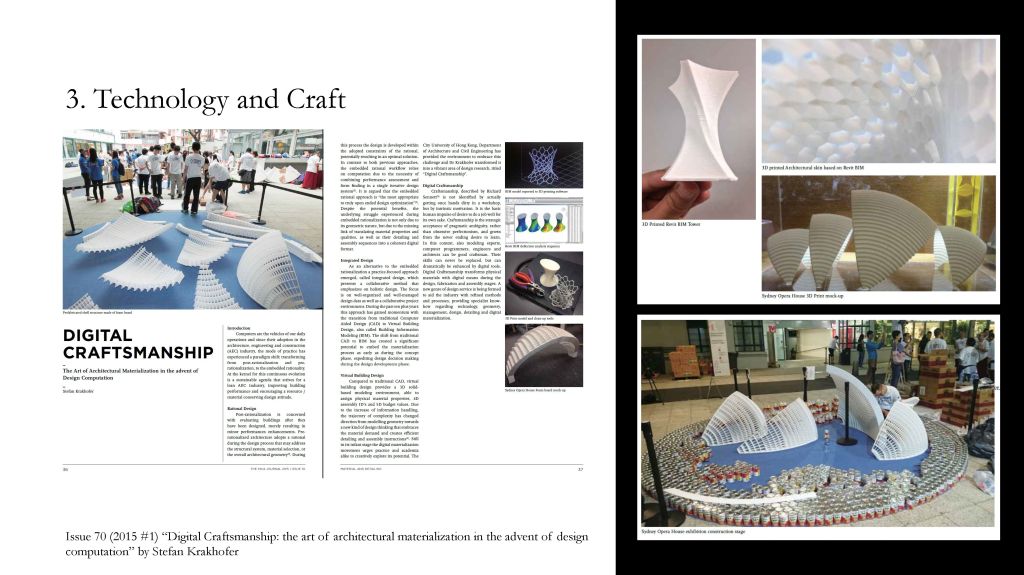
- Technology and Craft
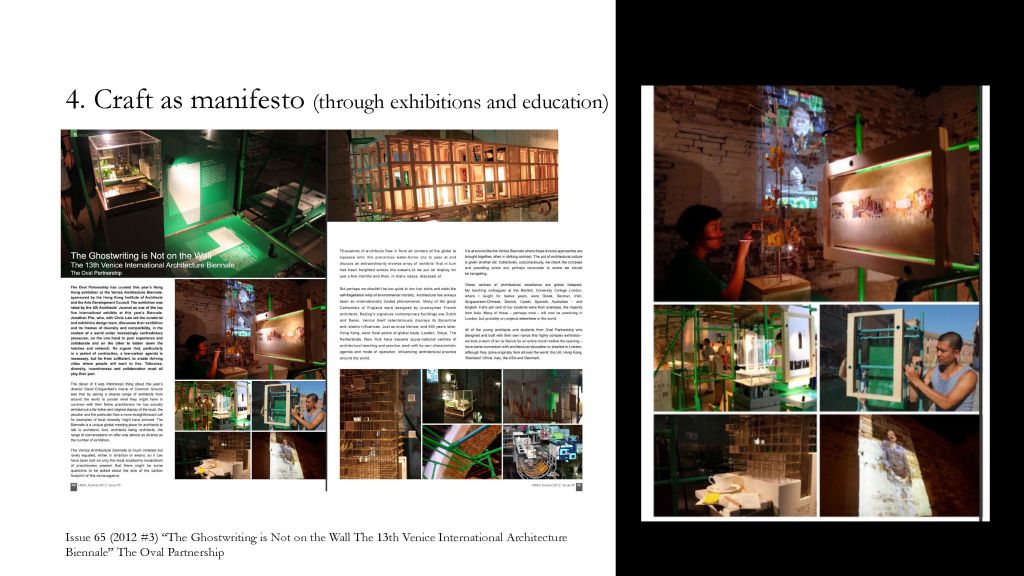
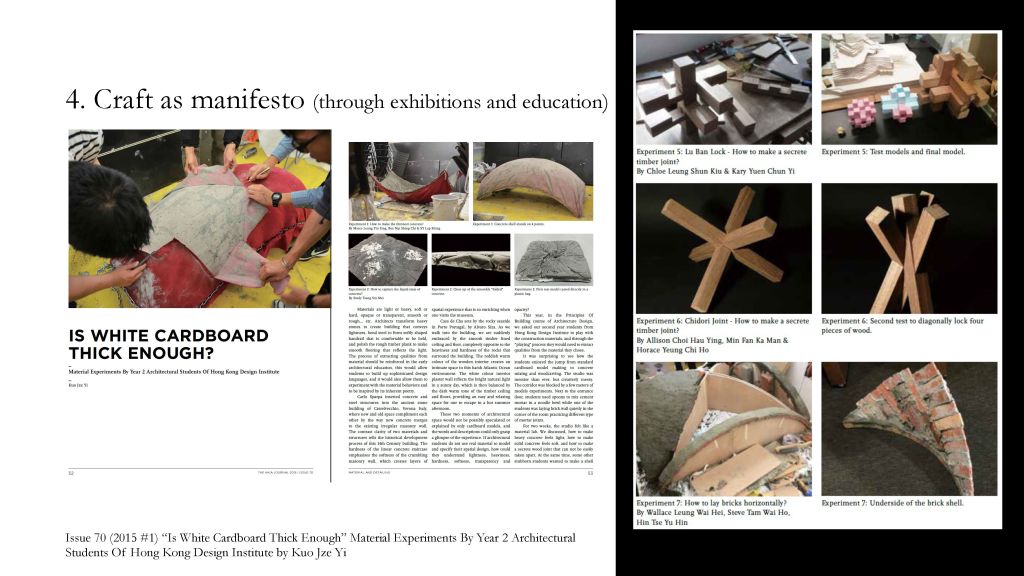
- Craft as a manifesto (through exhibitions and education)
a few points to consider…
- on the scale of craft application – from detail to building
- on the methods of making – from manual to digital and in-between
- on the process – in the trend of digital and AI applications
 threshold 內外之間
Leave a comment