2024 Design Trust Seed Grant | collaboration with Veera Fung as Atelier In
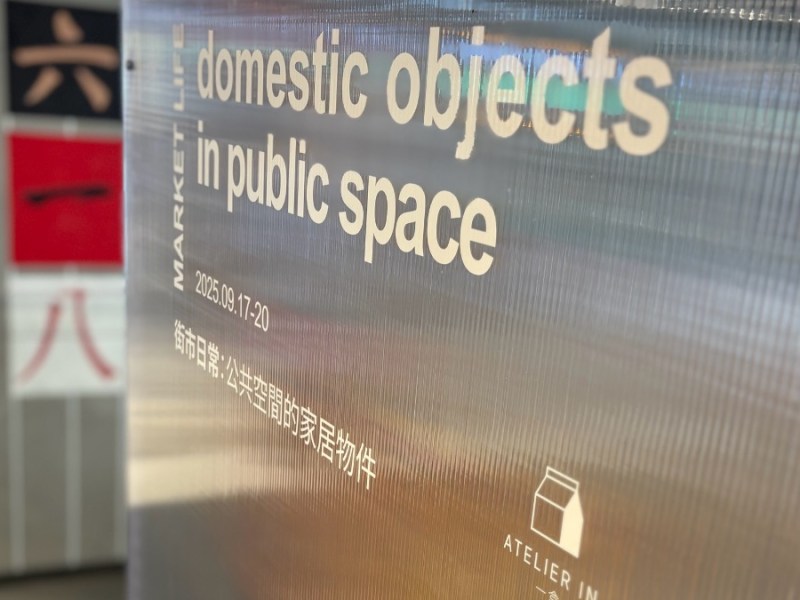
Market Life: Objects Assemblage
17-20 Sept 2025 | Installation and Exhibition | with Veera Fung as AtelierIn At the public market, domestic objects are hidden within an assemblage for different functions. Familiar objects in unfamiliar places make an extended domestic space, where household items are brought in to dress up an…
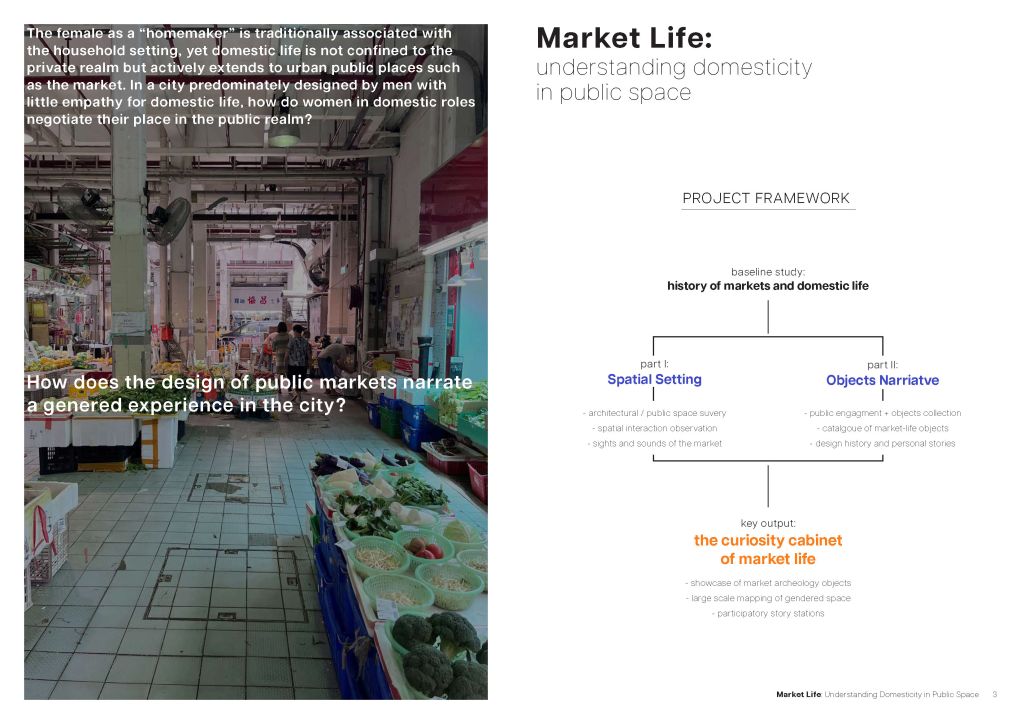
Keep readingThe female as a “homemaker” is traditionally associated with the private setting of household space, yet domestic life is not confined to the home but also active in urban public spaces. Markets in the city are the prime location where domesticity intersects with public life. However, the space – and therefore the experience – is often designed with a male perspective with little empathy for domestic life (Kern, 2019). How does the design of public markets dictate a gendered experience? And how do women in domestic roles negotiate their place in the public realm? This project investigates the meaning of domesticity as it manifests in the public realm.
In Objects of Desire: Design and Society, Adrian Forty (1986) traces the design history of 18th-20th century consumer products to illustrate the progress and changes in modern society, where the subject of study is not individual designer artefacts but a class of products and generic settings. This project takes a similar approach to examining public markets in Hong Kong as an urban archaeology practice to decode the gendered expression of everyday space and found objects. Through architectural documentation of market design and participatory fieldwork to collect household objects from market users and vendors, the project will present a narrative about the public life of female homemakers, following the concept of the “curiosity cabinet” developed by the team (Atelier In) and showcased in deTour 2022.
As an urban archaeology exercise through the lens of female homemakers, this project not only challenges the gender distinction encoded in public space but also captures a specific urban living model that Hong Kong was built upon and remains relatable and influential to local and regional development.
- Forty, A. (1986). Objects of desire: Design and Society since 1750. Thames and Hudson.
- Kern, L. (2021). Feminist city: Claiming space in a man-made world. Verso Books.
 threshold 內外之間
Leave a comment