6th ANCER Conference. 13 Dec 2025. CUHK x LaSalle
Moderators:
Audrey WONG, Programme Leader, MA Arts and Cultural Leadership, LASALLE
Sunitha JANAMOHANAN, Lecturer, School of Creative Industries, LASALLE
This multidisciplinary panel focuses on cultural governance at the city level in Asia and the dynamic relationships between policy actors, including local government authorities and institutions, artist collectives, and civic actors. Culture -interpreted as artistic forms as well as everyday practices and the values underlying these practices – has a role in the development of the urban environment. This is seen in Asian cities’ interest in “creative cities” and “creative economy development”, but the conventional economic growth model is today being challenged by concerns around ecological sustainability and socio-economic inequality. Are policymakers, cultural institutions and artistic/civic actors in Asia evolving in response to these challenges – for example, in new approaches to urban design and planning or an interest in collaborative governance models? The panel explores some emerging responses and addresses questions around shared resources, participatory structures, and policy practices that shape the governance of culture and institutions in cities.
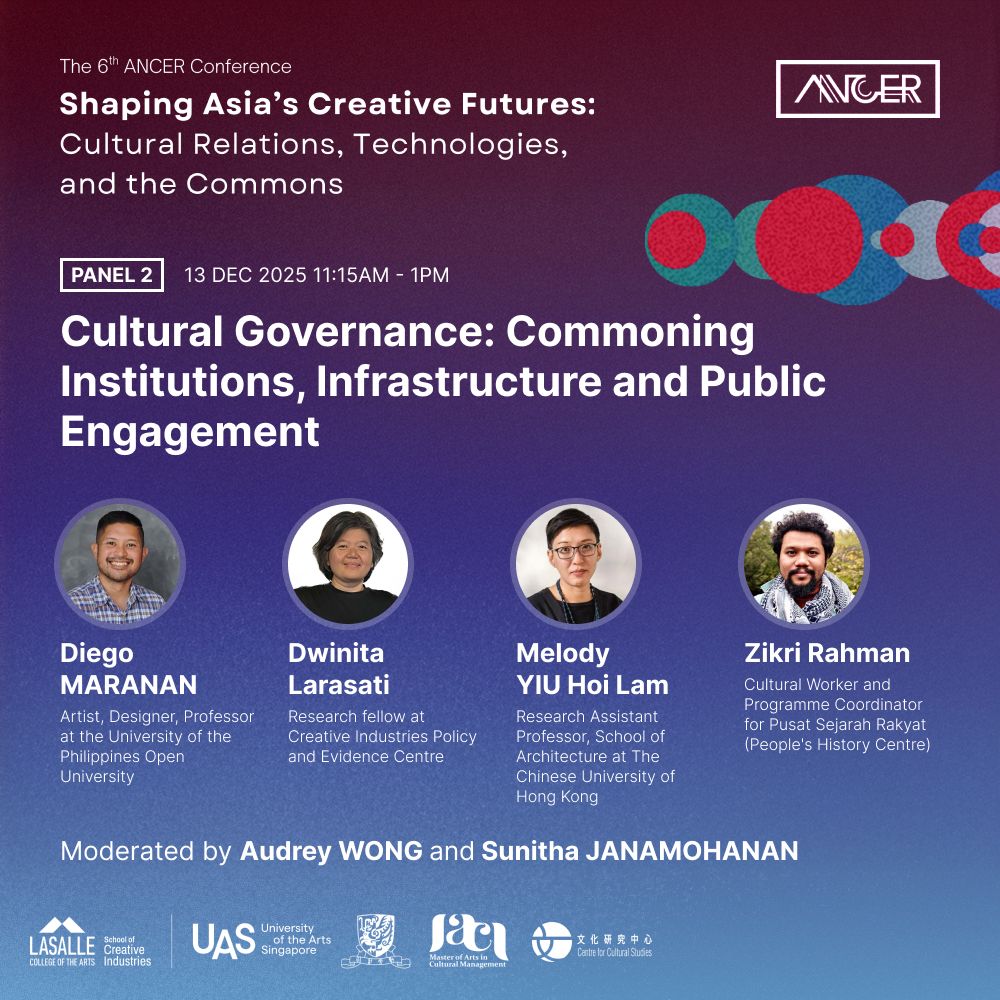
Public Space as Cultural Infrastructure
Melody Hoi-lam YIU, CUHK School of Architecture
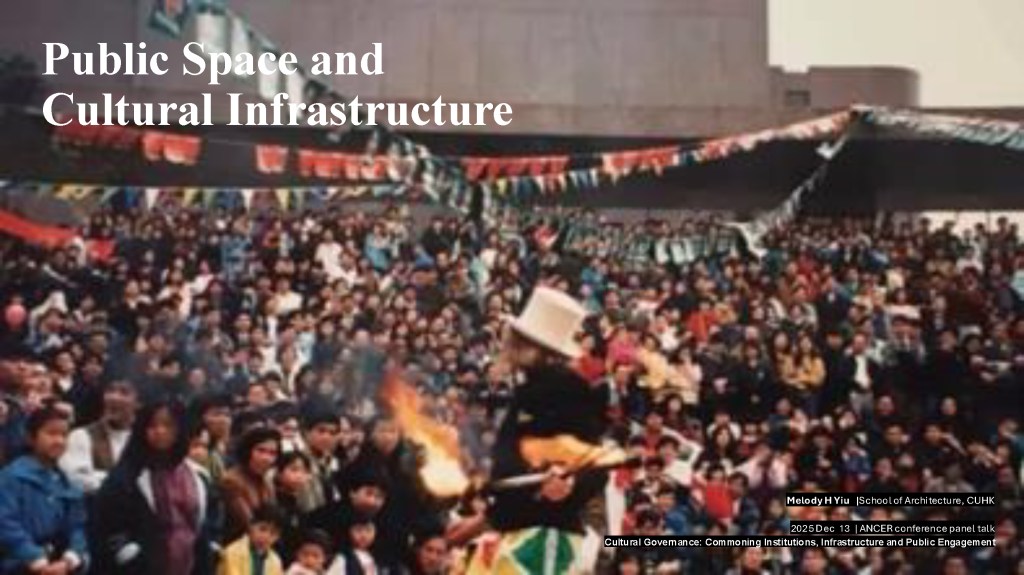
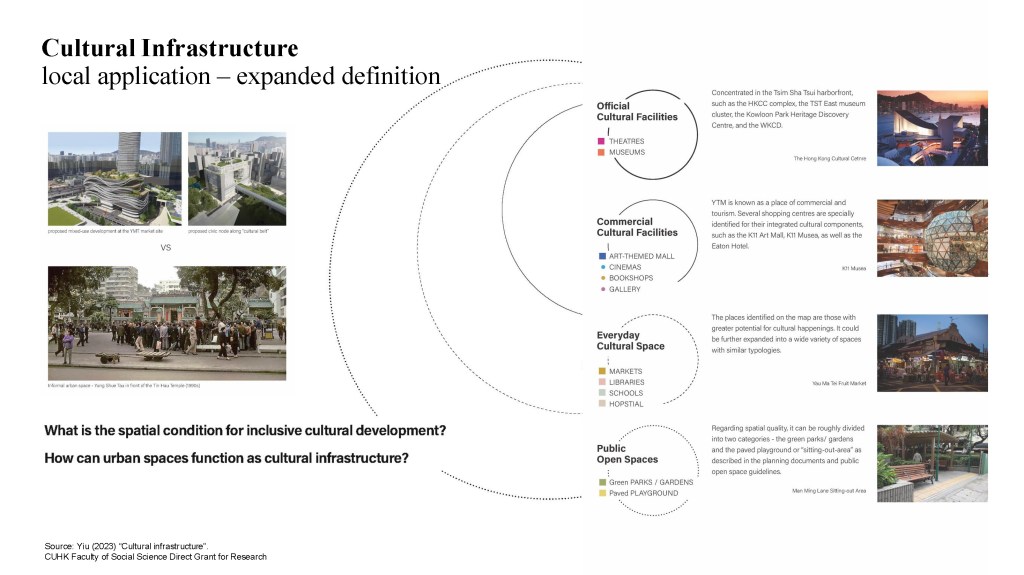
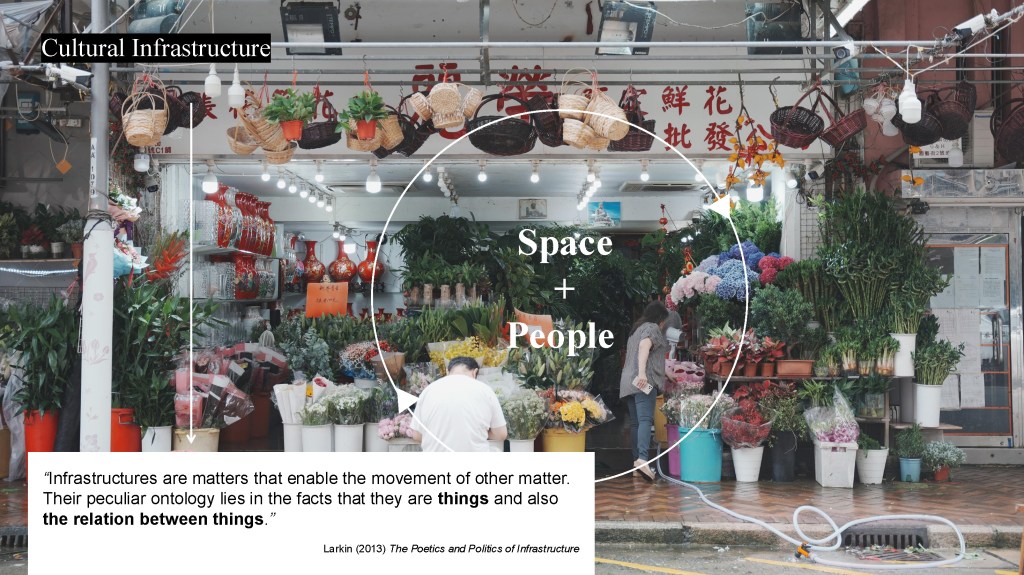
Since the post-war period, state-funded cultural facilities have been built and conceived as public amenities, following the idea of the democratisation of culture. As “common type” public buildings, these municipal cultural centres serve as everyday spaces for the community while supporting arts and cultural activities. Through illustrating the conception and construction of Hong Kong’s public cultural buildings since the 1970s, I’d like to discuss how the network of mundane public buildings plays a foundational role in nurturing local cultural development. It shifts away from the focus and reliance on large institutions or investment, following the emerging concept of cultural infrastructure as a planning tool and policy instrument that can leverage limited resources for cultural production. How do cultural facilities serve as everyday public spaces? Alternatively, we can flip the question and ask: How can small urban initiatives help build an infrastructure that supports cultural participation and inclusion?
 threshold 內外之間
Leave a comment